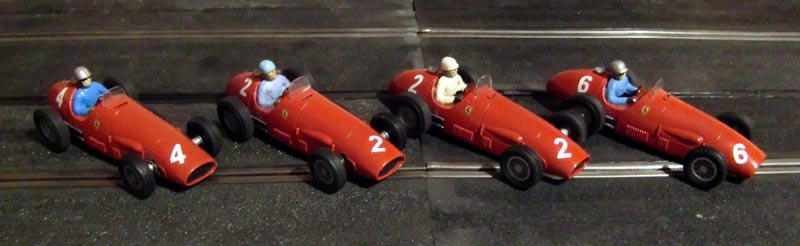
The full four car works team of Ferrari 500 cars; drivers, from left to right, Villoresi, Ascari, Farina and Taruffi.
Three privately owned Ferrari 500s ran in 1952. Louis Rosier (blue); Charles de Tornaco (yellow); Rudi Fischer (Swiss red and white). The other car is an old 166, which appeared occasionally.
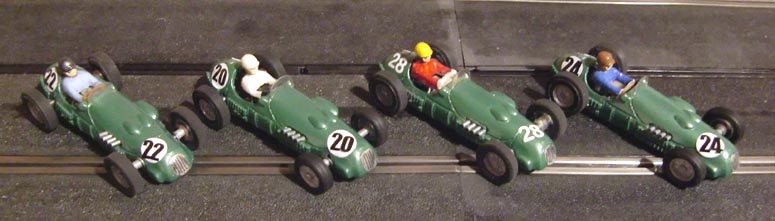
The British H.W.M. team appeared at almost every European race during 1952. Their regular drivers were Peter Collins and Lance Macklin, while the third car in the line was handled by numerous other pilots - seen here is Paul Frere. The final car, on the right, was driven many times Frenchman Yves Giraud-Cabantous - but rather slowly - he was already 49 years old.....
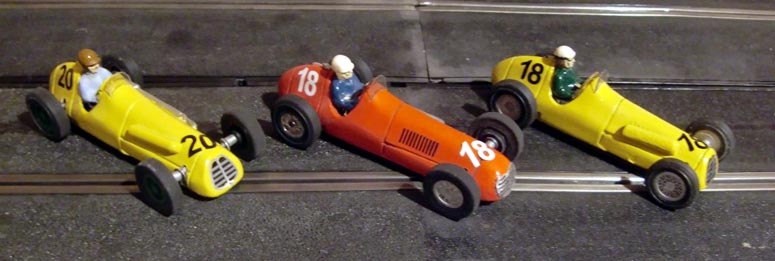
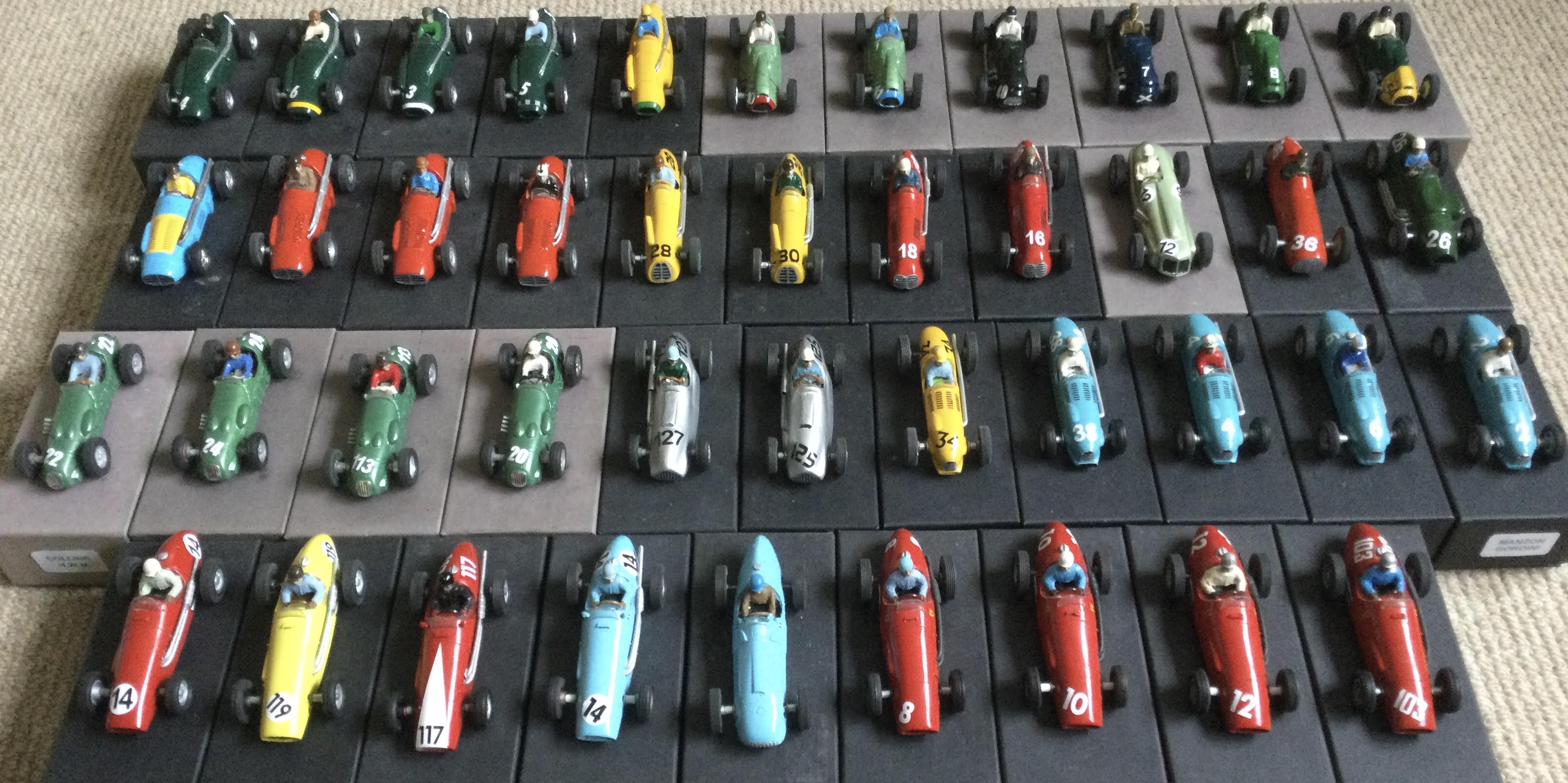
The Maserati factory did not compete in many races during 1952. A Brazilian team ran A.6.GCM cars in many races. They are seen here sandwiching one of the Platé Maserati 4.CLTs that were quite successful, especially in the hands of the Swiss driver Toulo de Graffenried.
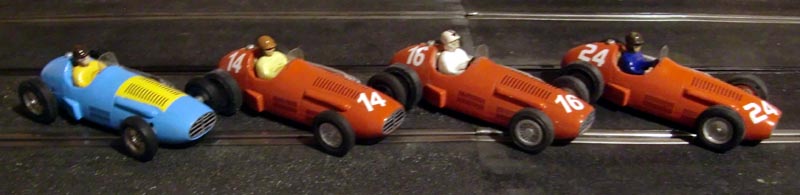
Towards the end of the 1952 season, Maserati released the final incarnation of the A.6.GCM, which would carry Juan Fangio, Froilan Gonzales, Felice Bonetto and the Argentine-liveried car for Onofre Marimon, through 1953.
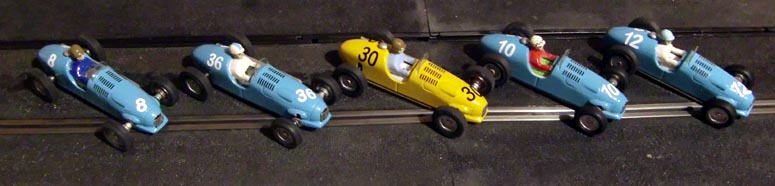
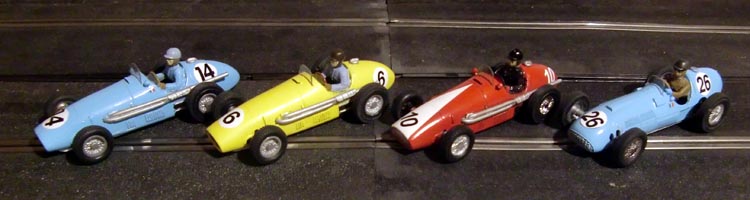
Gordinis were regularly on the grids throughout 1952. Here you see Belgian Johnny Claes' yellow version, flanked by the factory cars of Robert Manzon, Maurice Trintignant, Jean Behra and (Prince) B. Bira.
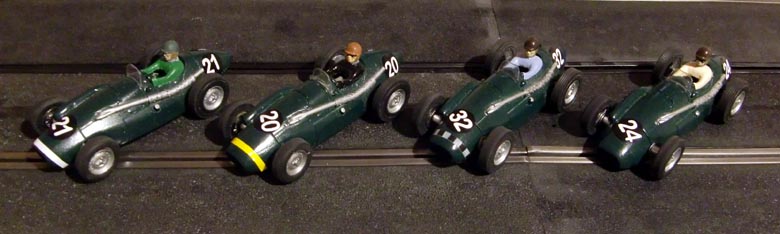
The British Connaught team did not participate in all the races. The regular team drivers were team owner Kenneth McAlpine, Dennis Poore, Ken Downing and Eric Thompson, with Stirling Moss driving a car at Monza.
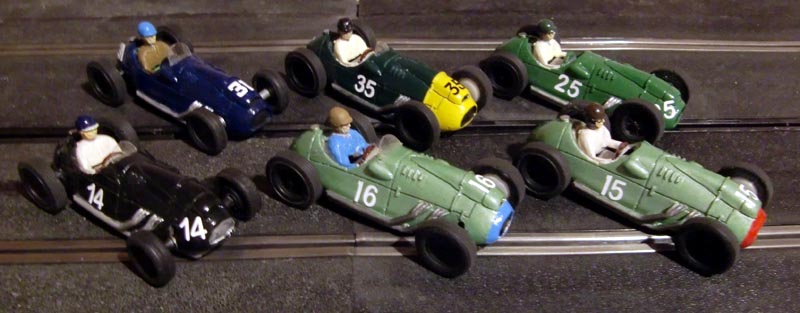
Small but beautiful??? Cooper Bristols were also regular competitors all around Europe. The Ecurie Richmond, light green cars, would often be seen, driven by Alan Brown (blue nose) and Eric Brandon (red nose). The very very dark green car (honestly, it's not black) is that of Mike Hawthorn. At the back you can see the Ecurie Ecosse car, Ken Wharton's yellow-nosed version and Bob Gerard's bright green car.
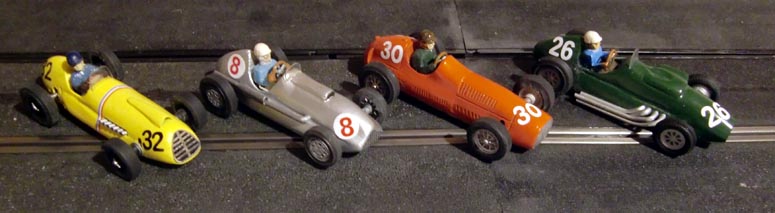
There were some one-ffs seen during 1952. On the right is the Alta; next to it an OSCA; then the rare German Veritas (of which I actually made two) and the extremely rare French Jicey, which appeared in only one of my races, at Montlhery, right at the back end of the season.
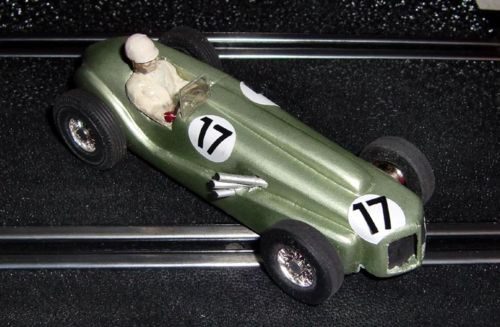
The very unusual G-type E.R.A. that Stirling Moss drove and didn't like very much! This last car is unique, in that it has a hollowed out balsa wood body as opposed to all the others you see on this page, which are resin cast.